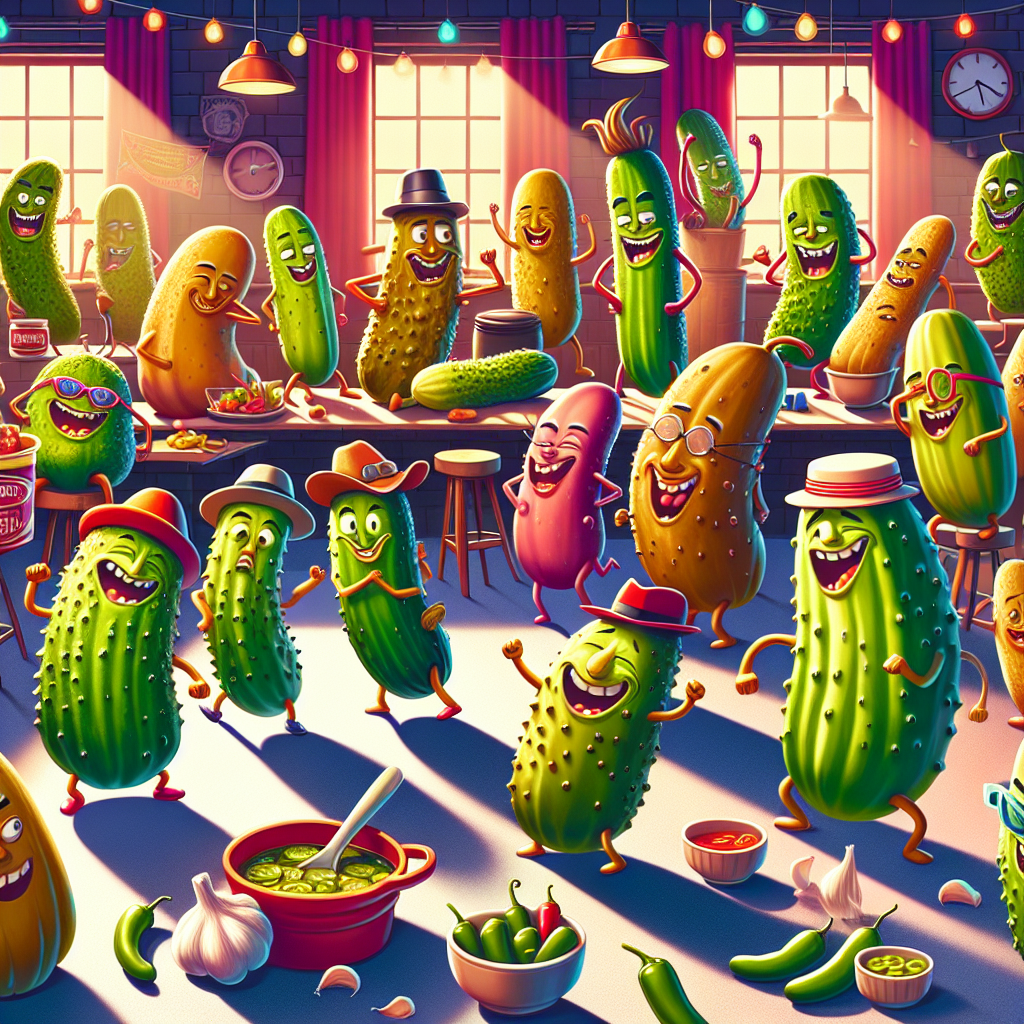
Do Pickles Have Consciousness? Surprising Insights From the Brine
Introduction
Do pickles have consciousness? I mean, really? As someone might exclaim after seeing their cat perform a science experiment with a jar of dill pickles: “Are we asking if cucumbers cured in vinegar with absurd potential have actual thoughts?” In a world enamored with quirky food lores and memes, the hypothesis isn’t just laughable—it’s intriguing. Join us on this jar-elating journey through the world of pickles, where pickles question reality, ecology dances with brine, and whimsical food myths leap into the spotlight.
Do Pickles Experience the World?
The Science of Sensory Perception
Myth: Pickles can sense the world around them.
Truth: Sensory perception implies a level of awareness, a domain dominated by living beings with nervous systems. Vegetables, including cucumbers that eventually become pickles, do not have neurons or brains. Yet, nature’s genius has made plants responsive to stimuli. Remember Venus flytraps closing on touch or sunflowers tilting toward the light? It’s all about chemical reactions. They don’t “feel,” but they do react.
Plants exhibit tropisms, movements to or away from stimuli, giving rise to the myth that they possess consciousness. The perception of wisdom in plants, much less pickled ones, may have emerged as an anthropomorphized dream.
Life in a Jar: Habitat Exploration
Myth: Pickles thrive in their brine habitat much like a fish in the sea.
Truth: The crisp cube of brined cucumber isn’t conducting symphonies of joy but sitting stagnant in a jar. While the pickle brine infuses intense flavor and is often mistaken for a nutrient-rich setting, it’s more of an acid bath than a tropical paradise.
- Flavor vs. Environment: Brine changes pickles’ taste.
- Personality or Preservation?: Spices enhance flavor, not pickle persona.
However, imagine pickles embarking on a vacation: Peppy dill in an herb spa, spicy gherkins snorkeling in peppercorn seas—all comically representing pickles’ “life” in pop culture memes.
Microbial Mindfulness
Myth: Pickles have personalities due to resident microorganisms cultivating consciousness.
Truth: A pickle’s vitality stems from microbial communities in fermentation. These microbes possess an intriguing simplicity (if you call decision-making by bacteria dance routines), coming up with blunt reactions to environmental changes. Microbiomes are key to fermentation, unleashing a symphony of transformation flavors, but they’re far from conscious.
- Fermentation’s Role: Probiotics, crucial in gut health.
- Microbial Mechanics: Microbes react, not reflect.
Curious about personalities or microbes? Discover Why Pickles Are A Personality.
The Art of Pickling and Its Impact
The Craft of Making Pickles
Myth: DIY pickling creates a masterpiece that whispers secrets of the past.
Truth: The art of pickling dances more to a melody of nostalgia than any mystic revelation. Embrace the simple chemistry: vinegar, salt, and cucumbers make magic—no mystical enticement required. Yet, the yearning for bygone eras inspires tales and traditions.
- Ingredients Matter: Vinegar, salt, dill—no ancient art.
- Nostalgia in a Jar: Rites echo through generations.
Conjured over kitchen tables, pickling is a family heirloom, a baton passed eagerly from one generation to another.
The Psychology of Pickles
Myth: Pickles’ tangy crunch equals childhood memories capable of inducing states of bliss.
Truth: Pickles evoke nostalgia; they don’t possess it. The sensory linkages that arise between flavor profiles and memory create enough serotonin-filled moments to spawn endless memes and humorous anecdotes. How could we forget the devastating yet charming power of food nostalgia?
- Flavor Memory: Pickles trigger emotional associations.
- Humor Connection: Meme-worthy foodie nostalgia.
Recall pickles’ ability to awaken old memories as you munch through a ridiculously outsized jar of dill.
Pickle Ecologies and Their Roles
Myth: Pickles have complex ecosystems supporting conscious interactions.
Truth: Different types of pickles contribute to culinary biodiversity, but they don’t host ecosystems akin to coral reefs. Dill to sweet and sour to half-sours, each has its unique presence but not a conscious mind.
- Culinary Versatility: Varied uses, never stagnant.
- Cultural Mosaic: Pickles’ global culinary assets.
Discover how the battle of Dill Pickle Vs Bread And Butter contributes to greater pickles’ ecological mastery.
The Philosophy of Pickles
Consciousness in the Food Chain
Myth: Consciousness is essential for all existing matter.
Truth: In philosophy 101, we brandish concepts of existence and cognition—leaving poor pickles at the mercy of human imagination, not food chain superiority. Not every living system requires consciousness—a leafless tree still stands without feeling self-doubt.
- Philosophical Musings: Intentions aren’t needed for survival.
- Context: Food items don’t necessitate consciousness.
Thus, pickles might hang in jars waiting for Darth Paperclip memes but don’t sit pondering existence.
Food Lore Meets Reality
Myth: Legends and fables grant pickles an esteemed status in mythology.
Truth: Legends, movies, and gastronomic gestures impart funny stories, not mythical power. From “Pickle Rick”’s wild transformations to sci-fi escapades, our generation’s myth writers love a zestful brined cucumber tale.
- Pop-Cultural Icons: Lovesick in folklore.
- Tall Tales: Tickle creativity, not reality.
Who can resist the tales cooked up in humor, the pickles no exception?
The Impact of Pickles on Human Perception
Myth: Pickles impact how we view life profoundly.
Truth: While the act of consuming may alter perceptions temporarily (and pants sizes permanently), it doesn’t bestow pickles with soulful depth. We’re often just projecting human feelings onto our favorite crunchy companions.
- Cultural Impacts: Consensus on pickle enjoyment.
- Perception Drift: Food perception aligns moods.
Dive further into this ecosystem through our Pickle Power Ranking.
Humorous Perspectives on Consciousness
Memes and Pickles: A New Brainstorming Sphere
Myth: Pickles are demi-gods in meme culture swaying minds.
Truth: The light-hearted memes surrounding pickles don’t incite grand revolutions or steer consciousness curry-offs, but they bring joy. Postulating “pickles at office desks” is hilarious and absurdly satisfying.
- Memes as Connection: Pickles tickle funny bones.
- Community Fun: Laughter over actual higher functions.
Got a meme? Share with our Pickle Tiktok Trends Explained.
The Great Pickle Debate
Myth: Pickles argue among themselves in jars about bread and butter.
Truth: Observing a static pickle staring into space prompts peculiarly funny debates. What if they could pontificate culinary preferences? Would dill argue for spicy mustard sponsorships, or would gherkins grumble about sandwich landings?
- Mirthful What-Effs: Wild scenarios rooted in the absurd.
- Jokes As Reality: Laughs, not law.
In a debate for the brine vine, pickles sit quiet and oblivious (also a bit soggy).
Reflective Insights from the Pickle Lens
Myth: Pickles are key to unlocking the universe’s secrets.
Truth: Pickles are pivotal; they represent much about culinary artistry, global impact, and meme power. But their consciousness is as elusive as a flying cucumber. Ponder this—with a jar of crunch and a chuckle.
- Pickle Perks: Humorous migration of joy.
- Food Reflections: Bridge conversations, tickle grand insights.
.
FAQ: Common Questions About Do Pickles Have Consciousness
How do we define consciousness in relation to pickles?
Defining consciousness means considering self-awareness and perception absent from pickles’ skill set. They lack nerves to process experiences like living beings.
What does science say about the minds of vegetables?
Science confirms that vegetables react to stimuli chemically, lacking neurons or brains. Chemicals prompt changes instead of conscious thought, amazing nonetheless!
Why do people associate emotions with pickles?
Emotions paired with pickles often reflect childhood memories or humorous pop culture reference like Pickle Rick, filling them with nostalgia and narrative.
When did the notion of food consciousness emerge?
Food consciousness came about when individuals began paying close attention to ethical eating and environmental impact, more philosophical musings about life than food.
Where can I find the weirdest pickle memes?
Check out Why Pickles Are A Personality for a quirky start! Engage in meme-sharing cultures online for more.
How can I explore more about the ecology of pickles?
Learn by exploring our Pickle Tiktok Trends Explained for the latest pickling trends and ecological impacts.
What funny facts exist about pickles in pop culture?
From pickle costumes to Pickle Rick, pickles have dove headfirst into pop culture, endlessly resurging as quirky, iconic food players.
Conclusion
Summing up, the delightful absurdities of “do pickles have consciousness,” here’s what we’ve learned:
- Reality vs. Myth: Pickles don’t have consciousness but possess a mind-bending cult following.
- Culture & Legacy: Nostalgia influences pickles’ gamely repute.
- Humor & Debate: Pickles fuel meme aesthetics, opening discourse.
- Philosophical Revelations: They invite reflection on more than a culinary level.
For more zesty journeys through food lore, dive deeper into our delicious world, where questions about the universe remain as delightfully unanswerable as whether pickles can think.
Next Pickle Move
Browse Pickle Picks for more satire, weird food energy, and fresh pickle drops.
Read the Latest Pickle Posts so the best posts land in one place.